3.14.2009

All American priorities…

We are what we do

According to a recent Bloomberg report, the future looks grim for many children now living in California:

California teachers organized protests in more than a dozen cities today as about 26,000 may lose their jobs because of spending cuts the Legislature approved last month to keep the state from running out of money.

School districts across the most-populous U.S. state have been warning thousands of teachers that they may be fired as a result of California's declining tax collections. The plan signed by Governor Arnold Schwarzenegger last month cut $8.4 billion from schools and community colleges out of $15 billion trimmed from state spending through June 2010.

It seems that the Obama stimulus lacks the funds needed to educate well the young. Yet America certainly has money to fund those things the Obama government considers important. For instance, the New York Times reports that:

The protracted wars in Iraq and Afghanistan are forcing the Obama administration to rethink what for more than two decades has been a central premise of American strategy: that the nation need only prepare to fight two major wars at a time.

This is an odd response to the current situation. It is strange because one might expect that failures of this degree and number would motivate the Obama administration to abandon the militarism which generated the debacles. Why, one might ask, given the failures in Iraq and Afghanistan, must the United States consider fighting two or more major wars at any given time? Why has the supposedly realistic Obama administration chosen to deepen its commitment to war-preparation and war-making? What enemies does America have that the country must always plan for war as well as to muster the will needed to make war anywhere in the world? As it turns out, every country and nearly everyone is a possible enemy:

"We have to do many things simultaneously if our goal is to remain the ultimate guarantor of international security," Mr. Donnelly [a policy 'expert' at the American Enterprise Institute] said. "The hedge against a rising China requires a very different kind of force than fighting an irregular war in Afghanistan or invading Iraq or building partnership capacity in Africa."

The United States of America — "…the ultimate guarantor of international security...." This pretentious assertion, one that emerges so easily from the mouths of many right-wing ideologues, concisely expresses the utter madness one can find these days in Washington, DC. The idea comes by its insanity with comparative ease since the United States currently guarantees no one's security, is effectively bankrupt and loses most of those wars it chooses to fight. America is, in fact, the major source of the insecurity which saturates the world today. The global presence of this threat, a threat which originates in Washington and serves the interests of the American elite, is just one legacy of the Bush regime's totalizing militarism, a governmental style the Obama administration has yet to repudiate.

In any case, it ought to be clear that, when it comes to spending to maintain America's empire, neither major party would fail to sacrifice military effectiveness in order to provide for the well-being of the children they allegedly represent.

3.13.2009

China warns Washington

According to the New York Times:

The Chinese prime minister, Wen Jiabao, expressed unusually blunt concern on Friday about the safety of China's $1 trillion investment in American government debt, the world's largest such holding, and urged the Obama administration to provide assurances that the securities would maintain their value in the face of a global financial crisis.

How might President Obama credibly assert that China's bonds will maintain their value throughout the current crisis? He cannot, of course. By definition a riskless investment does not exist. Perhaps the prime minister is playing an assurance game by seeking to promote trust and cooperation between two countries that have much to lose if economic crisis takes a turn for the worse.

Celebrity death match?

Cramer vs. Stewart

Howard Kurtz of the Washington Post thus characterized the latest round of this "epic battle":

Jon Stewart wasn't trying to be funny.

Jim Cramer wasn't trying to be obnoxious.

The result was riveting, if not particularly hilarious, television, with Stewart dominating all the way.

Yves Smith of Naked Capitalism asks:

Why is it that the Daily Show is the only media outlet calling out CNBC on its, how shall we put it politely, less than stellar moments?

Alessandra Stanley, writing for the New York Times, dismisses Stewart by comparing him to a Congressional grandstander with a messianic streak:

Mr. Stewart treated his guest like a C.E.O. subpoenaed to testify before Congress — his point was not to hear Mr. Cramer out, but to act out a cathartic ritual of indignation and castigation.

"Listen, you knew what the banks were doing, yet were touting it for months and months, the entire network was," the Democratic Senator from Comedy Central said. "For now to pretend that this was some sort of crazy, once-in-a-lifetime tsunami that nobody could have seen coming is disingenuous at best and criminal at worst."

Congress has — belatedly and showily — gone after the leaders of banks, auto companies and insurance companies for their complicity in the financial meltdown. Mr. Stewart has always had a messianic streak to his political satire, as when he ripped into Tucker Carlson and Paul Begala on "Crossfire" for "hurting America." He is now focusing on business news cable networks like CNBC, which not only failed to foresee the credit crisis, but, in his view, sided with the bankers and helped inflate the bubble.

She concludes with this gem: "Mr. Stewart kept getting the last word, but Mr. Cramer may yet have the last laugh."

Readers may judge the quality of the interview for themselves by watching the unedited version:


How America prepares for the coming civil unrest?

In an essay that discusses America's compelling desire to jail its citizens, its commitment to prison privatization (profit taking from incarceration), the decadence of its judicial-political system (reflected in the replacement of the rule of law with the rule by law) and the use it makes of servile prisoner labor (profit taking from servitude), Chris Floyd concludes with this warning:

As the economy craters around the world, governments and their servitor intellectuals are sounding clarion calls about a coming tide of "unrest" amongst the newly pauperized rabble. This is to be met not with sensible economic policies designed to rectify the vast imbalances, injustices and virulent corruption of the sweetheart-deal world, but instead with multitrillion-dollar bailouts of bankers, venture capitalist and privateers — and with "contingency plans" for "security operations" to keep the rabble in line. The jails, prisons and detention centers will soon be full to bursting with those forced into petty crime by need and desperation — and with anyone who dares to venture outside a specially designated, often fenced-in "free speech zone" to protest the continuing greed of the elite. Meanwhile, the failed Drug War keeps on raging, doing nothing to stem the flow of narcotics but enriching a few people immensely, and providing justification for an every-expanding array of draconian police powers that too many states find too useful to give up now. So there will be no end of backroom operators and government frontmen ready to work their correction connections to squeeze money from this rising tide of human suffering.

3.12.2009

Colbert chimes in on Rand


Another revolutionary era?

Anthony Giddens future-gazes

To have a revolution means replacing one social system (or subsystem) with another. What aspect of modernity does Anthony Giddens, a much celebrated sociologist and social theorist writing for a popular audience in the Guardian, believes to be on the skids? We are witnessing, he claims, "…the demise of the fossil-fuel economy."

If Giddens is right about this, if the world is now entering an epoch that will be characterized by diminishing fossil–fuel use, one obvious and possible benefit would take the form of securing the long-term survival of life on the planet, a possible future which a resource-wasteful modern economic system has already made uncertain. Fossil fuel use is, as many have come to accept, a key source of the pollution which drives the global warming which threatens life on the planet. The present moment may be dire, but it contains a real opportunity, namely, to replace an unsustainable social system with one that could endure. Another benefit, paradoxically enough, would be the economic renewal this revolutionary transformation would require. Considered thusly, it would count as a beneficial instance of Schumpeter's creative destruction.

Gidden's continues:

On the nitty-gritty side, one major concern has to be jobs. A climate change new deal will create new jobs, its proponents argue. I'm not so sure, if by this they mean net jobs — that is to say, larger numbers than existed before. As more energy is produced from low-carbon sources, and energy efficiency increases, some workers in the fossil fuel industries, like coal mining, will be put out of work. Most forms of technological innovation reduce the need for labour power.

Naturally, a transformation of this kind and magnitude would also radically change the modern form of everyday life:

Jobs will be created not so much through renewable technologies themselves, but through the lifestyle changes that coping with climate change and energy security will bring about. The emerging economy will be even more radically post-industrial than the one we have now.

Less can be more, Giddens suggests. Less carbon use can provide the basis for a better form of modern life than the kind known since the advent of modern industrialism. Giddens thus proposes consciously and qualitatively altering this everyday life so that those fated to live it can also enjoy a greater degree of well-being than they had beforehand. But this new life would not be one that depends upon the astonishing resource-use and, to put it bluntly, waste typical of modern industrial economy. The current situation has revealed that growth for the sake of growth is irrational:

Pondering what form recovery from recession should take must cause us to think seriously about the nature of economic growth itself, at least in the rich countries. It has been known for a long while that, above a certain level of prosperity, growth does not necessarily lead to greater personal and social welfare. Now is the time to introduce more rounded measures of welfare alongside GDP and give them real political resonance. Now is the time for a sustained and positive critique of consumerism which can be made to count politically.

The market fundamentalist scourge has been routed, Giddens avers:

The period of Thatcherite deregulation is over. The state is back.

… Now is the time to work out how to ensure that recovery does not mean a reversion to the loads-of-money society.

…

Complex financial instruments are out of fashion, blamed for the economic collapse. Yet we will have need of them again because, properly regulated, they are often the key to long-term investment, rather than a force against it.

And this fundamentalism must remain defeated if the human life is to survive and even thrive:

Both economic institutions and climate change and energy policy will need active planning, though the mistakes made by previous generations of planners have to be avoided.

Although it seems ironic to do so, we may give thanks for the global economic crisis for this emerging opportunity, Giddens' concludes:

The financial crisis and its aftermath have given a jolt to established ways of thinking that could and should prove massively important. We're at the end of the end of history.

Looting alleged at Merrill Lynch

This is Andrew Como's latest assertion about the defunct bank, according to the New York Times (the link comes via Naked Capitalism). The looting in question took the form of bonus payments taken by Merrill Lynch employees just before the Bank of America acquired the troubled investment bank. And, as Yves Smith of Naked Capitalism emphasizes, the Times story also reports the Como allegation that Merrill Lynch employees cooked their books to gain these bonuses:

"It appears that some of these losses may have been booked by Merrill employees who marked down their portfolios only after their 2008 bonuses were set," the attorney general wrote in the filing. "Despite the gargantuan unexpected losses, Merrill did not reconsider its bonus awards" and Bank of America did not request or demand that Merrill reduce its bonus pool, he wrote.

A second Times story indicates that the Obama administration will adopt an aggressive and, perhaps, coordinated strategy in this area. Momentum for a legal approach to the crisis and its sources has been building since last fall (see this, this and this).

3.11.2009

Jon Stewart heaps further abuse on rightwing fools

You think they would have learned from Stewart's Tucker Carlson putdown….

3.10.2009

More whining from the right

This time the squeal focuses on the mean guy comedian Jon Stewart:

The coming civil turmoil....

Because protests and riots have already appeared across the world, events that undoubtedly were responses to the economic crisis and its social effects, José Miguel Alonso Trabanco wrote the following about the United States:

For decades, overall political stability in the US was taken for granted. However, as it has been pointed out, even senior American statesmen are taking into consideration that financial volatility could fuel a wave of discontent which could easily reach troubling proportions. It seems that America itself is not immune from "regime-threatening instability" as the Pentagon and the American intelligence community terms it. It is likely that American government officials have not dismissed the worst-case scenario. Indeed it looks like they have been preparing accordingly.

Therefore, as has been scrutinized here, once one proceeds to connect the dots a very dark picture begins to emerge, to say the least. An all-encompassing cloud of uncertainty prevents us from formulating an accurate forecast regarding what developments will occur and how they will unfold during the next few months, let alone years. The only thing that can be taken for granted and that one can be sure of is that the unthinkable has now become thinkable.

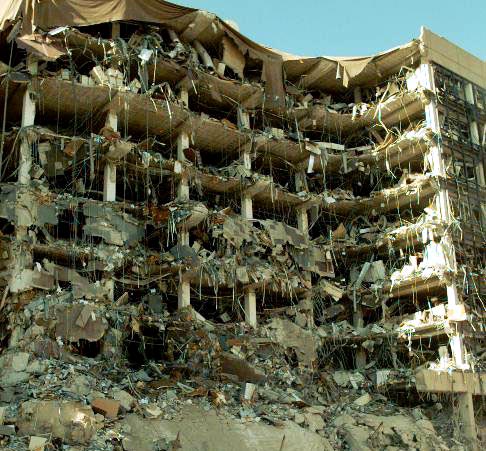
But why, when all things are considered, would Trabanco believe rioting unthinkable when well-informed Americans can easily recall events like these: